On or near this day, Lewis and the Mandan delegation reach the Shenandoah Valley and the Great Wagon Road that connects Philadelphia with the American South.[1]Traveling with Meriwether Lewis to Washington City is a Mandan delegation from the Knife River Villages—Chief Sheheke, his wife Yellow Corn, and their son. Speaking Mandan and French was … Continue reading
In Colorado, Zebulon Pike descends to the plains where he is happy to once again be among the buffalo.
Reaching the Shenandoah Valley
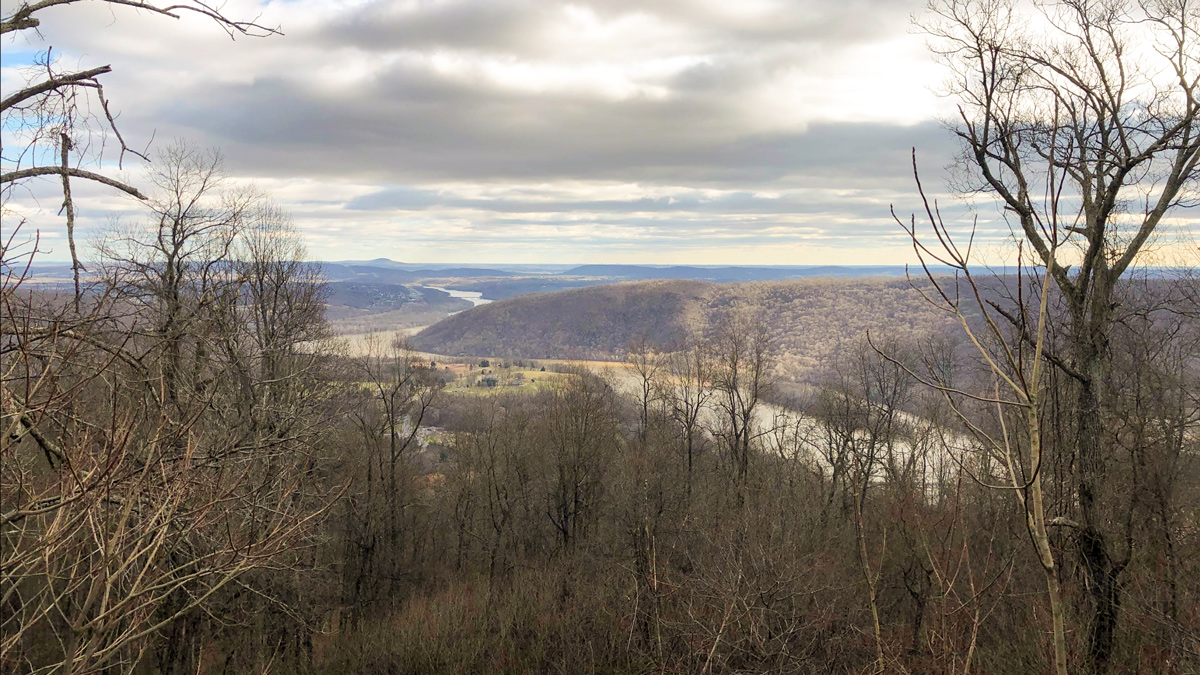
In 1864, artist Alfred R. Waud (1828–1891) sketched the Shenandoah Valley from the same vantage point as the photographer in the above image. The artist’s original documentation still matches the modern landscape:
This sketch shows the valley up to where the Massanutten Mountain range divides it into the Luray valley on the left, the Shenandoah valley continuing on the right, with a smaller-Powers Fort valley between the two running up into the Massanuttens. On the right, or the northern side of the valley is the Shenandoah or Great North Mtn. range. On the left the rugged heights of the Blue Ridge, with Snickers, Ashby’s, Manassas, Chester, and Thorntons Gaps in succession, and still further on Swift-run, Powells, Browns, Jarmans, and Rockfish Gaps. The last within twenty miles of Charlottesville.
—A.R. Waud.
In the Shenandoah Valley, the Great Wagon Road—also called The Great Valley Road of Virginia, Valley Road, and Philadelphia Wagon Road—had long been traveled by Native Americans, European settlers, and Revolutionary War Solders. Lewis and his company would need to travel another dozen or so days before reaching the most distant landmark noted above—Rockfish Gap that led to his home west of Charlottesville, Virginia.[2]Alfred R. Waud, “Shenandoah Valley from Maryland Heights”, Library of Congress, www.loc.gov/pictures/item/2004660474/, accessed 27 September 2026.
For more about Maryland Heights, see Harpers Ferry by Air, and Harpers Ferry.
Pike’s Return to the Plains
Marched at nine o’clock. Kept straight down the creek to avoid the hills. At half past one o’clock shot two buffalo, when we made the first full meal we had in three days. . . . The land is very rich, and covered with old Tetau camps.
—Zebulon M. Pike[3]Donald Jackson, The Journals of Zebulon Montgomery Pike (Norman, Oklahoma: University of Oklahoma Press, 1966), 1:351.
Pikes Peak from Colorado City
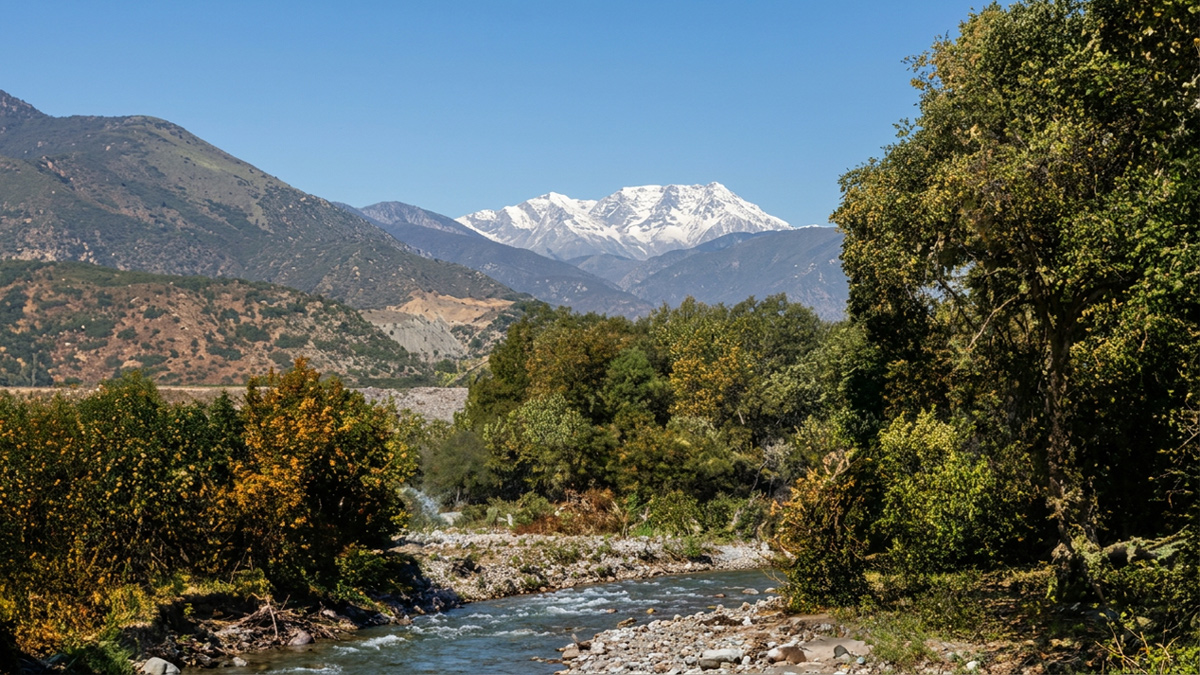
Image generated from a hand-tinted lithograph, artist unknown. Original courtesy Curt Teich Postcard Archives Digital Collection, CARLI Digital Collections, collections.carli.illinois.edu/cdm/singleitem/collection/nby_teich/id/431952.
The “Tetau” are likely Comanches. See also Buffalo: Native Uses.
Lewis’s Return to the Plains
Fields [perhaps Reubin Field] killed a fine buck and a goat; Josh. Fields [Joseph Field] saw two buffaloe below us some distance which are the first that have been seen . . . . much rejoiced at finding ourselves in the plains of the Missouri which abound with game.—
—Meriwether Lewis, 8 July 1806
Notes
| ↑1 | Traveling with Meriwether Lewis to Washington City is a Mandan delegation from the Knife River Villages—Chief Sheheke, his wife Yellow Corn, and their son. Speaking Mandan and French was interpreter René Jusseaume who brought one of his wives and two children. Expedition private François Labiche was included to translate between French and English. Finally, records indicate expedition sergeant John Ordway was serving as Lewis’s assistant. During this time, William Clark remained at his home at the Falls of the Ohio. |
|---|---|
| ↑2 | Alfred R. Waud, “Shenandoah Valley from Maryland Heights”, Library of Congress, www.loc.gov/pictures/item/2004660474/, accessed 27 September 2026. |
| ↑3 | Donald Jackson, The Journals of Zebulon Montgomery Pike (Norman, Oklahoma: University of Oklahoma Press, 1966), 1:351. |
Experience the Lewis and Clark Trail
The Lewis and Clark Trail Experience—our sister site at lewisandclark.travel—connects the world to people and places on the Lewis and Clark Trail.
Discover More
- The Lewis and Clark Expedition: Day by Day by Gary E. Moulton (University of Nebraska Press, 2018). The story in prose, 14 May 1804–23 September 1806.
- The Lewis and Clark Journals: An American Epic of Discovery (abridged) by Gary E. Moulton (University of Nebraska Press, 2003). Selected journal excerpts, 14 May 1804–23 September 1806.
- The Lewis and Clark Journals. by Gary E. Moulton (University of Nebraska Press, 1983–2001). The complete story in 13 volumes.
This site is provided as a public service by the
Lewis and Clark Trail Alliance
with additional funding from the following: