James Wilkinson (1757-1825) was one of the most duplicitous, avaricious, and altogether corrupt figures in the early history of the United States. Although he served in the Revolutionary War as adjutant general under General Horatio Gates, he took an oath of allegiance to Spain in 1787, and was paid by the Spanish government as agent Number Thirteen. In 1803, he was appointed governor of Louisiana Territory above the 33rd parallel—the northern boundary of the present state of Louisiana.
—Joseph A. Mussulman[1]The remainder of this article is an extract from We Proceeded On the quarterly journal of the Lewis and Clark Trail Heritage Foundation: Arlen J. Large, “Lewis and Clark Under Cover”, We … Continue reading
Selling Out to Spain
Orders have been given to the president’s private secretary and the infantry Captain Lewis to ascend the Missouri River with a military command, and supplied with the articles necessary to make the proper observations at different points, and if circumstances favor the extension of the enterprise, they are to proceed as far as the Pacific Ocean … An express ought immediately to be sent to the governor of Santa Fe, and another to the captain-general of Chihuaga [i.e., Chihuahua], in order that they may detach a sufficient body of chasseurs to intercept Captain Lewis and his party, who are on the Missouri River, and force them to retire or take them prisoners.
—Vincent Folch, the Spanish governor of West Florida[2]Robertson, James A., ed., Louisiana Under the Rule of Spain, France, and the United States 1785-1807 (Books for Libraries Press, Freeport, 1969 reprint of 1910-11 edition), 2:334, 338, 342. Robertson … Continue reading
James Wilkinson (1796-97)
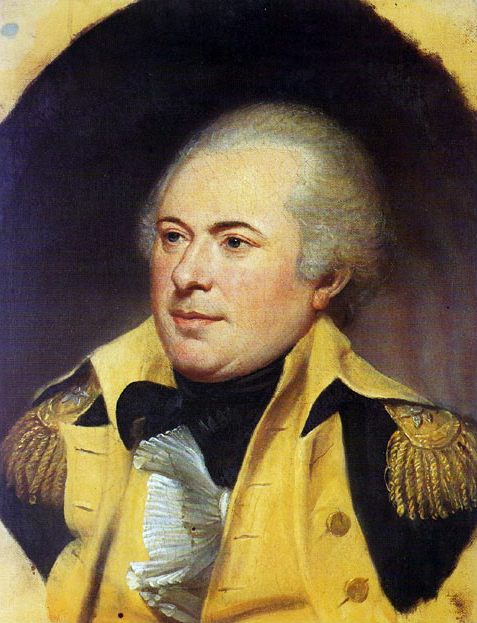
Independence National Historical Park, INDE 14166. Oil on canvas. Original size, 24 x 20 in.
This message to Cuba, forwarded to the court of King Carlos IV in Madrid, was signed by Vincent Folch, the Spanish governor of West Florida. In reality, Folch was only the translator. The original version was written in English by James Wilkinson, Commanding General of the U.S. Army. For this covert advice, and a promise of more to come, the Spanish paid Brigadier General Wilkinson $12,000 in newly minted Mexican silver. Forwarding the message to the Marquis of Casa Calvo, his paymaster in New Orleans, Wilkinson wrote on 12 March 1804: “The Memorial which accompanies this Letter has its origin in the anxious solicitude which I feel for the prosperity of the two Powers, which I love equally … ” He also gave instructions on how future contacts should be made: “My name or condition shall never be written, and always shall be designated by the number 13. All our correspondence must be carried on in cypher; in general it shall be with Your Excellency alone, or in case that is impracticable, with Governor Folch … “[3]Wilkinson to Casa Calvo quoted in Abernethy, Thomas P., The Burr Conspiracy (Oxford University Press, New York, 1954), 11-12. The original is in the Archivo Historico Nacional, Madrid.
This wasn’t Wilkinson’s first sellout to Spain. In fact, Number 13 claimed Madrid owed him an additional $8,000 in back pay for previous services, which stretched all the way back to a 1787 plot to convert Kentucky into an independent ally of Spain. Wilkinson kept finding ways to live well on a soldier’s pay. An officer in America’s Revolutionary army, he later fought Indians in Ohio and through seniority rose in the Adams administration to one-star rank, the highest then authorized by Congress. Both business and military duties made him a frequent visitor to New Orleans, where a French official tagged him as “an illogical fellow, full of queer whims and often drunk … “[4]Pierre Clément de Laussat, French prefect at New Orleans, 7 April 1804, quoted in Robertson, Louisiana, 2:53. As one painfully balanced biography put it: “His important services as a soldier, Indian administrator, pioneer trader, and Western expansionist were frequently forgotten in the opposition caused by his tricky unscrupulousness. “[5]Hay, Thomas R. and Werner, M.R., The Admirable Trumpeter: A Biography of General James Wilkinson (Doubleday, Garden City, 1941), ix.
Lewis and Clark Connection
In the small world of Federal service, both Lewis and Clark were well acquainted with Wilkinson. During the army’s 1793–95 Ohio campaigns against Chief Little Turtle, Lieutenant Clark was one of the junior officers who admired the flashy Wilkinson more than the top commander, General Mad Anthony Wayne. In 1807, Wilkinson had made himself so unpopular as governor of Upper Louisiana that Thomas Jefferson decided to replace him with Meriwether Lewis, the returned hero of the Rockies.
Of course, Lewis and Clark knew nothing of Number 13’s specific treachery of urging Spain to intercept their expedition in 1804. At least partly in response, Spanish officials tried to find the American explorers with Indian surrogates or Mexican troops, but were foiled by the immensity of the Western plains.
Suspicion about a cozy tie with Spain actually had swirled around Wilkinson for years. In 1797, a tip about the general’s seeming involvement in the Kentucky plot came to Washington from a Federal boundary surveyor in Natchez, Andrew Ellicott, who later coached Lewis on celestial navigation.[6]Hay and Werner, 171-172. In 1810, during a House of Representatives inquiry into charges that Wilkinson “corruptly received money from the government of Spain or its agents,” surveyor Isaac Briggs (another of Lewis’s astronomy teachers) said the general admitted receiving “about” $10,000 from Spain back in 1804.[7]Briggs deposition to the House of Representatives, 13 April 1810. Isaac Briggs Papers, Library of Congress.
History’s Verdict
But nobody could ever quite corner the slippery general. Jefferson had heard all the rumors, but seemed eternally grateful to Wilkinson for his role in blowing the whistle on the murky Western intrigues of former Vice President Aaron Burr. Treasury Secretary Albert Gallatin conceded in 1806 that the rumors should “induce caution” about Wilkinson, but added: “Of betraying his [country] to a foreign country I believe him to be altogether incapable.”[8]Gallatin to Jefferson, 12 February 1806, quoted in Malone, Dumas, Jefferson the President, Second Term. (Little,Brown,Boston, 1974)p. 224.Editor’s Note: The original source sheds more light on … Continue reading
Not until a century later did the smoking-gun documents showing the depth of Wilkinson’s guilt turn up in the archives of Madrid and Seville. There, American historian Isaac Cox and others found a letter from Don Vincente Folch identifying Wilkinson as the true author of the 1804 “Reflections on Louisiana,” and the “Number 13” cover letter from Wilkinson to the Marquis de Casa Calvo. Cox disclosed his findings in a paper read at a meeting of the American Historical Association on 30 December 1913, and published the following year in the American Historical Review.[9]Cox, Isaac J., “General Wilkinson and His later Intrigues With the Spaniards,” American Historical Review. Vol. 19. No. 4 July 1914, letter from Gov. Folch to the Captain-General of Cuba … Continue reading
Had Spain actually stopped Lewis and Clark, history’s verdict on Wilkinson’s role doubtless would be harsh indeed. But as things turned out, his spying merely produced the kind of irrelevant fizzle that so of ten plague undercover intrigues by governments. “We may doubt if the Spanish got their money’s worth,” concluded Jefferson biographer Dumas Malone. “He seems to have told them little they did not know already or could not have easily ascertained, and he may have suggested little or nothing they would not have thought of anyway.”[10]Malone, 219.
Related Pages
Estimate of the Eastern Indians
Early intelligence report
by Joseph A. Mussulman
The expedition had one major outcome that was made available to the public well before the expedition was over, the “Estimate of the Eastern Indians,” which Lewis and Clark sent back on the barge in April 1805.
Too Né (Eagle Feather)
Arikara guide and diplomat
by Clay S. Jenkinson
This Arikara leader rode upriver with the expedition in the weeks that followed to negotiate a peace settlement with the Mandan. In the spring of 1805 he went down river with the barge to St. Louis. After a series of delays, he went to Washington, DC, to meet with President Jefferson.
Andrew Ellicott
The American Surveyor General
by Nancy Davis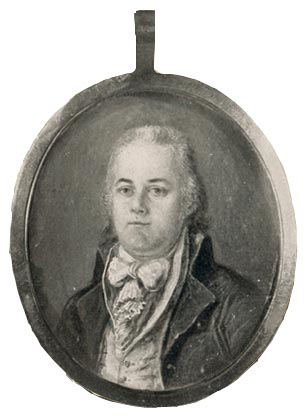
Ellicott was one of the best surveyors of his time, renowned today for the accuracy of his work. He was appointed Surveyor General of the United States in 1792. Ellicott’s personal history was particularly applicable to the mission at hand.
Fur Trade after the Expedition
by W. Raymond Wood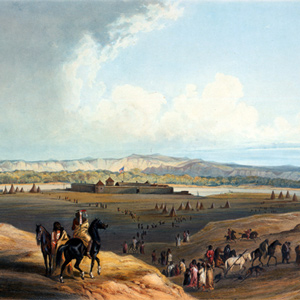
The Louisiana Purchase and the lure of its beaver population led to a veritable flood of traders and trappers moving toward the Upper Missouri and the Northern Rocky Mountains and the slow abandonment of the overland trade in the United States by Canadian and British interests.
Fort Massac
Western headquarters
by Jo Ann Brown-Trogdon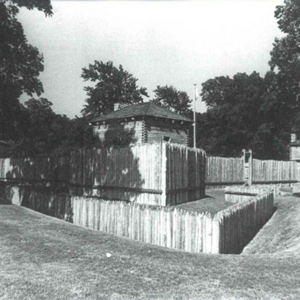
Six years before signing on with the Lewis and Clark Expedition, George Drouillard took part in a sensitive international mission for the United States Army. This mission was probably just one of Drouillard’s many services to the United States in the last decade of the eighteenth century.
November 14, 1803
End of the Ohio
by Kristopher K. Townsend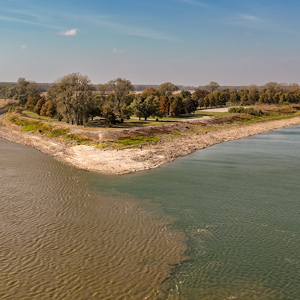
The expedition moves down the Ohio and sets up a camp at its confluence with the Mississippi. Lewis is ill, but he finds relief from a strong laxative found in Rush’s bilious pills.
In Washington City, “An Account of Louisiana” is presented to Congress. The report includes information about a mountain of rock salt and Spanish land grants.
The Mouth of the Missouri
by Joseph A. Mussulman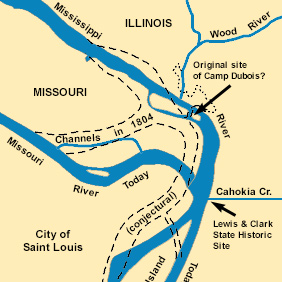
The Missouri River still contributes its tint a few miles north of St. Louis. It is difficult to determine exactly how much, and how often, the confluence of the Missouri and the Mississippi Rivers changed during the nine decades after the Lewis and Clark Expedition.
March 5, 1804
Wilkinson's sedition
by Kristopher K. Townsend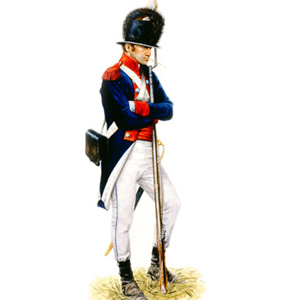
On or near this date, the commander of the U.S. Army James Wilkinson advises Spain to block the Lewis and Clark Expedition—an act of sedition. The captains continue in St. Louis, the others at Wood River.
March 24, 1804
Reflections on Louisiana
by Kristopher K. Townsend
At winter camp on the Wood River, Clark sends out letters. Sometime this month, the Commanding General of the U.S. Army secretly advises Spanish officials to stop the Lewis and Clark Expedition.
The Freeman-Custis Expedition
The "Grand Excursion"
by Dan Flores, Joseph A. Mussulman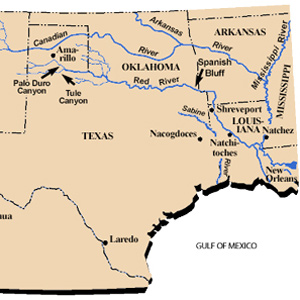
Narrated in both English and Spanish, Daniel Flores tells the story of a parallel, southern exploration now nearly forgotten.
La Freeman-Custis Expedición
La Gran Excursión
by Dan Flores, Joseph A. Mussulman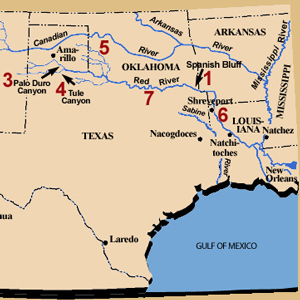
Narrado tanto en inglés como en español, Daniel Flores narra la historia de una exploración paralela y sureña ahora casi olvidada.
March 11, 1805
Charbonneau's corruption
by Kristopher K. Townsend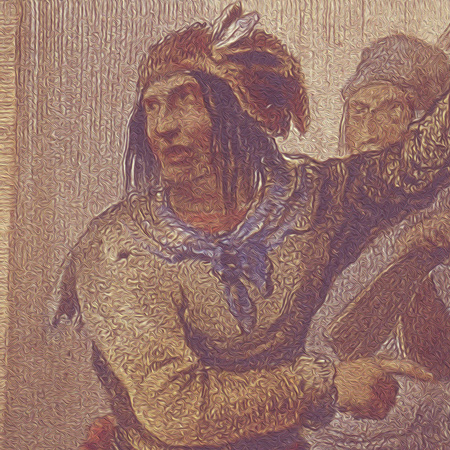
At Fort Mandan below the Knife River Villages, the captains accuse Hidatsa interpreter Toussaint Charbonneau of acting in the interests of local fur traders and give him an ultimatum.
In Washington City, President Jefferson commissions James Wilkinson as Territorial Governor of Louisiana.
In St. Louis, Pierre Chouteau—U.S. Agent for Indian affairs west of the Mississippi River—informs Jefferson of an alliance against the Osage—a complication arising from the captains sending a delegation of Osage to Washington City.
April 7, 1805
Leaving Fort Mandan
by Kristopher K. Townsend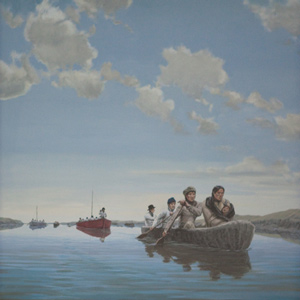
The permanent party—under Capts. Lewis and Clark—leaves Fort Mandan in six dugout canoes and two larger pirogues bound for the Pacific Ocean. They make it only as far as Mitutanka, one of the Knife River Villages. The return party—under Cpl. Warfington—takes the barge and one canoe down the Missouri headed for St. Louis.
In Washington City, James Wilkinson writes to James Madison, United States Secretary of State, accepting his appointment as Governor of Louisiana Territory.
April 19, 1805
Grounded by winds
by Kristopher K. Townsend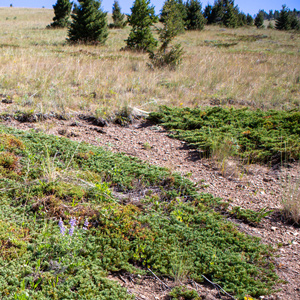
The wind being high, the captains decide to remain another day at their present camp below present Williston, North Dakota. Lewis describes the area’s beaver and collects a specimen of creeping juniper.
In Washington City, Secretary of War Henry Dearborn orders James Wilkinson to establish a factory near St. Louis to manufacture and store Indian trade goods.
June 13, 1805
"sublimely grand specticle"
by Kristopher K. Townsend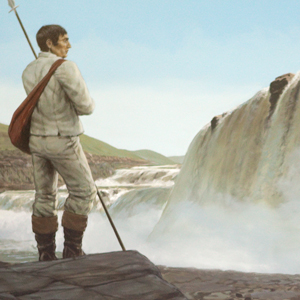
Lewis reaches the Grand Fall of Missouri and marvels at its ‘sublimely grand spectacle’. Several miles downriver, Clark gives Sacagawea a dose of salts as a purgative and the enlisted men move the boats 13 miles up the river.
Near the mouth of the Ohio at Fort Massac, General James Wilkinson has questions about the delegation of Native Peoples who recently arrived aboard the expedition’s barge (keelboat).
June 15, 1805
Sacagawea deteriorates
by Kristopher K. Townsend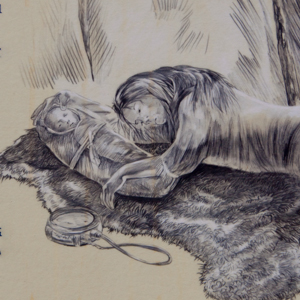
Below the Great Falls of the Missouri, Sacagawea’s health deteriorates, and Charbonneau asks to return home. For the enlisted men, towing the boats becomes increasingly difficult. Several miles ahead and unaware of Sacagawea’s condition, Lewis fishes and counts the scuta on a prairie rattlesnake.
Elsewhere, Pierre Chouteau ships Lewis’s Fort Mandan specimens from St. Louis to Washington City via New Orleans, and the expedition’s barge (keelboat) arrives at Fort Massac.
June 27, 1805
Sightseeing at the falls
by Kristopher K. Townsend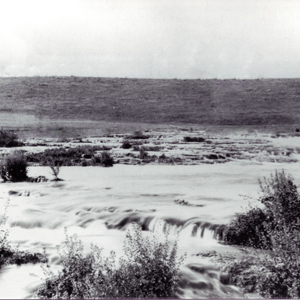
At the Great Falls of the Missouri, Sgt. Ordway’s group detours from the portage route to view the falls and Giant Springs. Sgt. Gass reports hail stones as large as seven inches. At the upper camp, Pvts. Whitehouse and Frazer sew hides that will cover the iron-framed boat, Drouillard and Pvt. J. Field ambush a grizzly bear, and Seaman barks at bears all night.
Near Kaskaskia, James Wilkinson takes his oath of office as Governor of Louisiana Territory and asks the Secretary of War what should be done with the many Natives that have come to St. Louis.
July 28, 1805
Sacagawea's capture
by Kristopher K. Townsend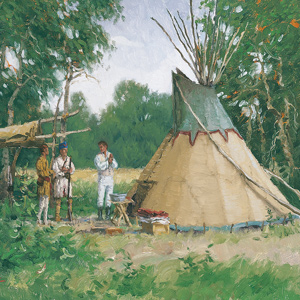
At the headwaters of the Missouri, the expedition takes a rest day. The captains learn of Sacagawea’s capture as a young child, and Lewis remarks on how she “would be perfectly content anywhere”. A shade bower is built for Clark, and Pvt. Whitehouse is busy making clothes for the party.
In a lengthy report to Thomas Jefferson, James Wilkinson discusses the new Indian factory at Camp Belle Fontaine and encourages the President to allow Pierre Chouteau to take Native delegations to Washington City.
September 8, 1805
Mountains to the left and right
by Kristopher K. Townsend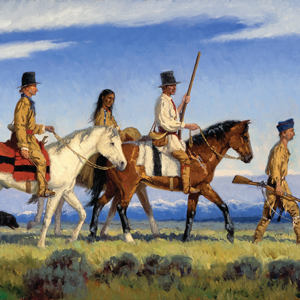
The expedition proceeds north through the Bitterroot valley with the snow-capped Bitterroot Mountains to the west and the mostly barren Sapphire mountains to the east. They find two Indian horses and a colt. They also find a new pest—brittle prickly pears.
In St. Louis, the Governor of Upper St. Louis, James Wilkinson, plans expeditions to the Yellowstone River and Sante Fe.
At Monticello in Virginia, President Jefferson writes about the mineral specimens that Lewis sent from Fort Mandan.
November 21, 1805
Clatsop and Chehalis visitors
by Kristopher K. Townsend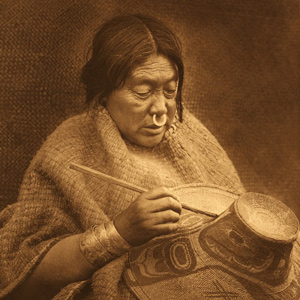
At Station Camp near the mouth of the Columbia, some Clatsops and Lower Chehalis visit. Additionally, the wife of Chinook chief Delashelwilt brings six young females to camp. Clark describes Chinookan head flattening and woven mats and hats.
In Washington City, Secretary of War Henry Dearborn orders Louisiana Territory Governor and Commander of the U.S. Army, James Wilkinson, to cancel his plans to build a fort on the Platte River.
December 10, 1805
Beachcombing
by Kristopher K. Townsend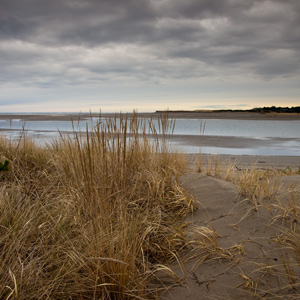
Near present Seaside, Oregon, Clark goes beach combing while the villagers look for fish stranded by the retreating tide. He returns to the Fort Clatsop construction site, where workers are falling trees and building a foundation.
Near Little Falls, Minnesota, U.S. Army explorer Zebulon Pike‘s men must drag two sleds over the prairie and a pirogue over the frozen river.
An attempt to return Arikara chief Too Né (Eagle Feather) to his home is stopped by some Kansa. Louisiana Territory Governor James Wilkinson decides to send him to Washington City.
February 12, 1806
Two Oregon grapes
by Kristopher K. Townsend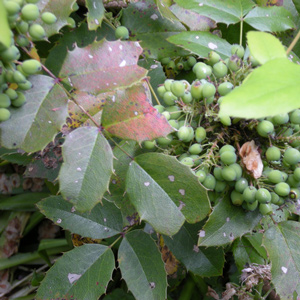
At Fort Clatsop near present Astoria, Oregon, Lewis describes two species of Oregon grape, and three Clatsop dogs are brought as payment for missing elk meat. In Washington City and Madrid, suspicions grow.
August 16, 1806
Parting gifts
by Kristopher K. Townsend
At the Knife River Villages in present North Dakota, a Mandan village gifts more corn than the expedition boats can carry. A swivel gun is given to Hidatsa Chief Le Borgne, and the blacksmith tools are given to Charbonneau. Mandan Chief Sheheke (Big White) agrees to go to Washington City.
In St. Louis, a discredited James Wilkinson leaves town after being recalled as Governor of Upper Louisiana—a change that would directly impact Meriwether Lewis.
September 3, 1806
News from home
by Kristopher K. Townsend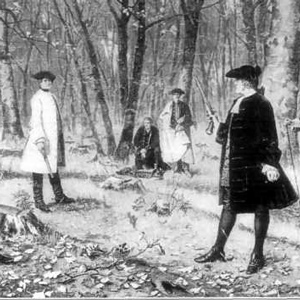
Heading home, the enlisted men paddle 60 miles down the Missouri River. They meet trader James Aird and his crew of 18 headed to the Sioux in two boats. The captains hear news from home: Thomas Jefferson is again president, James Wilkinson is now Louisiana governor, and Alexander Hamilton died in a duel with Aaron Burr. They camp somewhere above present Sioux City, Iowa.
September 10, 1806
News of Zebulon Pike
by Kristopher K. Townsend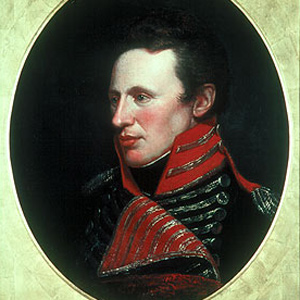
Fur traders heading up the river tell the captains that Zebulon Pike is leading an expedition to the source of the Arkansas River. They end the day near present Bean Lake, Missouri.
September 17, 1806
News from James McClallen
by Kristopher K. Townsend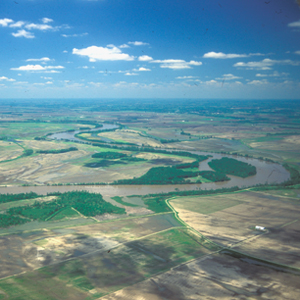
Heading back to St. Louis, the enlisted men pilot the boats through the perilous Malta Bend, and the captains meet an old military associate, James McClallen. He plans to establish a post near Santa Fe and reports that most people have forgotten about the Lewis and Clark Expedition. Camp is near present De Witt, Missouri.
Notes
| ↑1 | The remainder of this article is an extract from We Proceeded On the quarterly journal of the Lewis and Clark Trail Heritage Foundation: Arlen J. Large, “Lewis and Clark Under Cover”, We Proceeded On, August 1989, Volume 15, No.3, 20–22. The original, full-length article is provided at lewisandclark.org/wpo/pdf/vol15no3.pdf#page=12. |
|---|---|
| ↑2 | Robertson, James A., ed., Louisiana Under the Rule of Spain, France, and the United States 1785-1807 (Books for Libraries Press, Freeport, 1969 reprint of 1910-11 edition), 2:334, 338, 342. Robertson was unaware of the true authorship of “Reflections on Louisiana,” citing it as proof of Gov. Folch’s “hostility toward the Americans.” |
| ↑3 | Wilkinson to Casa Calvo quoted in Abernethy, Thomas P., The Burr Conspiracy (Oxford University Press, New York, 1954), 11-12. The original is in the Archivo Historico Nacional, Madrid. |
| ↑4 | Pierre Clément de Laussat, French prefect at New Orleans, 7 April 1804, quoted in Robertson, Louisiana, 2:53. |
| ↑5 | Hay, Thomas R. and Werner, M.R., The Admirable Trumpeter: A Biography of General James Wilkinson (Doubleday, Garden City, 1941), ix. |
| ↑6 | Hay and Werner, 171-172. |
| ↑7 | Briggs deposition to the House of Representatives, 13 April 1810. Isaac Briggs Papers, Library of Congress. |
| ↑8 | Gallatin to Jefferson, 12 February 1806, quoted in Malone, Dumas, Jefferson the President, Second Term. (Little,Brown,Boston, 1974)p. 224. Editor’s Note: The original source sheds more light on Gallatin’s opinion: Of the General I have no very exalted opinion, he is extravagant and heady, & would not I think feel much delicacy in speculating on public money or public land. In both those respects he must be closely watched; and he has now united himself with every man in Louisiana who had received or claims large grants under the Spanish Govt. (Gratiot, the Chouteaus, Soulard &c) But, tho’ not perhaps very scrupulous in that respect, and although I fear that he may sacrifice to a certain degree the interests of the U. States to his desire of being popular in his Government, he is honorable in his private dealings; and of betraying his to a foreign country, I believe him altogether incapable. Yet Ellicots information, together with this hint may induce caution; and if any thing can be done which may lead to discoveries either in respect to him or others, it would seem proper; but how to proceed I do not know.Albvert Gallatin to Thomas Jefferson, 12 February 1806, Founders Online, National Archives, founders.archives.gov/documents/Jefferson/99-01-02-3223 accessed 11 May 2022. |
| ↑9 | Cox, Isaac J., “General Wilkinson and His later Intrigues With the Spaniards,” American Historical Review. Vol. 19. No. 4 July 1914, letter from Gov. Folch to the Captain-General of Cuba describing a preliminary conversation with Wilkinson, in which the general agreed to pu this “Reflections on Louisiana” in writing. Folch’s letter was found in the Cuban Papers, Archives of the Indies, Seville. |
| ↑10 | Malone, 219. |
Experience the Lewis and Clark Trail
The Lewis and Clark Trail Experience—our sister site at lewisandclark.travel—connects the world to people and places on the Lewis and Clark Trail.
Discover More
- The Lewis and Clark Expedition: Day by Day by Gary E. Moulton (University of Nebraska Press, 2018). The story in prose, 14 May 1804–23 September 1806.
- The Lewis and Clark Journals: An American Epic of Discovery (abridged) by Gary E. Moulton (University of Nebraska Press, 2003). Selected journal excerpts, 14 May 1804–23 September 1806.
- The Lewis and Clark Journals. by Gary E. Moulton (University of Nebraska Press, 1983–2001). The complete story in 13 volumes.
This site is provided as a public service by the
Lewis and Clark Trail Alliance
with additional funding from the following: