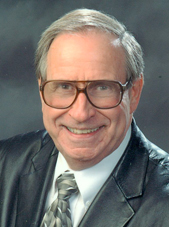
Joseph Mussulman

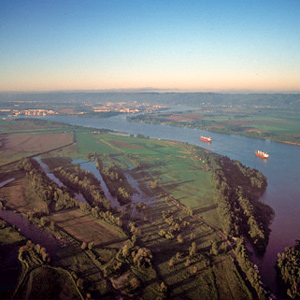
Marc A. Hefty photo.
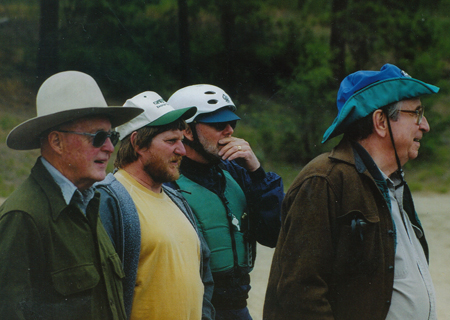
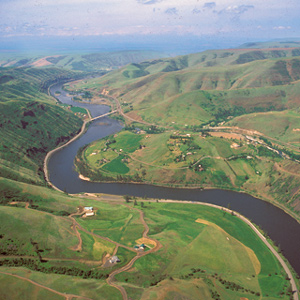
Photo by Bill Bevis.
Left to right: Two concerned dugout canoe owners, one concerned expert paddler, and Joe grinning with delight
Joseph A. Mussulman (1928–2017) was the founding producer, editor and writer for Discovering Lewis & Clark. After five years of preparation and experimentation the website went online in 1998, under the auspices of a non-profit entity called VIAs Inc., and funded by grants from various sources, especially–throughout the bicentennial observance from 2003 to 2006–the Challenge Cost Share Program of the National Park Service. In 2009 the site was taken over by the Lewis & Clark Fort Mandan Foundation of Washburn, North Dakota.
Dr. Mussulman earned his bachelor’s and master’s degrees in music history and literature at Northwestern University in 1950 and 1951. As a Danforth Scholar he earned a doctorate in humanities from Syracuse University in 1967.
He has written and produced a number of interpretive programs in collaboration with audio specialist Richard H. Kuschel, also of Missoula Montana. In 1986, he wrote, narrated, and co-produced a multimedia presentation for the Blaine County Museum (MT) titled Forty Miles from Freedom, about the Non-Treaty Nez Perce Indians’ final battle with the U.S. Army, at the Bear Paw Mountains in 1877. In 2012-13 Mussulman and Kuschel revised the 20-minute onsite production and updated it in High Definition video. In 1994 their interactive self-guided audio-CD tour of Yellowstone National Park, a five-hour program produced for Tour Technologies, Inc., received first prize in the category of media productions from the National Association for Interpretation. Their Two Days to Destiny, an audio interpretive tour of the Little Bighorn Battlefield, won first place from the NAI in 1995.
Mussulman is the author of five articles on Lewis and Clark that appeared in We Proceeded On, the official journal of the Lewis and Clark Trail Heritage Foundation, Inc.: “My Boy Pomp’: About That Name,” Vol. 21, No. 2 (May 1995); “Soundscapes: The Sonic Dimensions of the Lewis and Clark Expedition,” Vol. 21, No. 4 (November 1995); “Men in High Spirits: Humor on the Lewis and Clark Trail,” Vol.22, No. 2 (May 1996); “‘In Greatest Harmoney’: ‘Meddicine Songs’ on the Lewis and Clark Trail,” Vol. 23, No. 4 (November 1997); and “Pomp’s bier was a bar,” Vol. 27, No. 1 (February 2001).
Dr. Mussulman has designed and produced maps for various books, brochures and study guides about Lewis and Clark, including 58 full-color maps illustrating the expedition’s entire route from coast to coast for the travelers’ guide, Along the Trail with Lewis and Clark, by Barbara Fifer and Vicky Soderberg (2nd ed., Helena: Montana Magazine, 2001). Those maps also appeared in the same publisher’s annual Lewis and Clark Travel Planner and Guide. They may be seen in Discovering Lewis & Clark at Discovering Lewis & Clark from the Air. In 1998, he created a poster illustrating the trail from Washington, D.C. to the Pacific, for Farcountry Press.
His other publications include a biography, Dear People . . . Robert Shaw (Indiana University Press,1979; reprint, Chapel Hill, NC: Hinshaw Music, 1996), and Music in the Cultured Generation (Evanston: Northwestern University Press, 1974). From 1987 through 1998 he was the interpretive writer and designer of Montana Afloat, a series of sixteen maps of Montana’s major floatable rivers.
Dr. Mussulman was a 1999 recipient of a Montana Governor’s Arts Award. Several years later he received an award of meritorious achievement from the Lewis and Clark Trail Heritage Foundation “for outstanding contributions in bring to this nation a greater awareness and appreciation of the Lewis and Clark expedition.” In 2005, he received the Montana Governor’s Humanities Award.
Contributions to this Site
Horse Packing
Traveling with horse and mule
by Joseph A. Mussulman
Loading and handling a packhorse is hard work. It demands not only a great deal of physical strength and endurance, but also an eye for balancing a load on the first try, a head full of horse sense, the patience of a saint, and lots of experience.
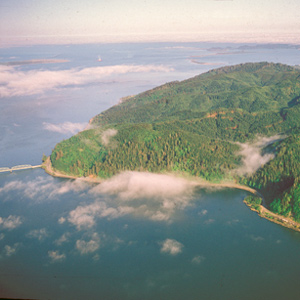
Wood River by Air
Starting point
by Joseph A. Mussulman
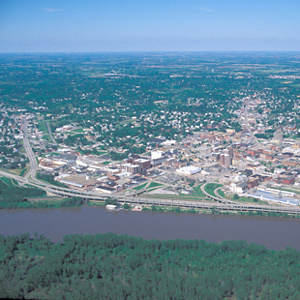
Clark recorded: “Capts. Lewis & Clark wintered at the enterance of a Small river opposite the Mouth of Missouri Called wood River, where they formed their party, Composed of robust Young Backwoodsmen of Character.”
Mapping the Lolo Trail
by Joseph A. Mussulman
Clark did not randomly insert wiggly lines merely to hint at the topography around K’useyneiskit. By comparing his sketches with a modern USGS map we can make reasonably good guesses as to what drainages he actually saw.
Postscript to the Purchase
Mapping the American future
by Joseph A. Mussulman, Pierce Mullen
Determining the extent of the upper Missouri watershed was the single most important task Lewis and Clark faced. Their search for the westernmost source of the Jefferson River nearly cost them their lives.
Wolverines
Mystery mammal, Gulo gulo
by Joseph A. Mussulman
Lewis referred to it as a “tyger cat.” Even Carl Linneaus, the father of modern taxonomy, couldn’t decide whether the wolverine belonged to the weasel family or the dog family.
Lewis’s Dog Seaman
A working expedition member
by Joseph A. Mussulman
The Shoshones, like all other Indian people, had owned, bred, trained, used, and loved dogs from the dimmest days of their own origins. What was it, then, about this dog that thrilled them so? Lewis called it sagacity.
Columbia River near Blalock
Greatest chief
by Joseph A. Mussulman
This scene’s most arresting feature is still the “high mountain of emence hight covered with Snow” on the photo’s horizon. Clark mistook it for Mount St. Helens. The Indians called the mountain Pahtoe. Since 1838 it has been known as Mount Adams.
White-tailed Deer
Odocoileus virginianus
by Joseph A. Mussulman
Lewis had no reason to write about the common or fallow deer of the East Coast, although in using it for the purpose of comparison, he gave quite a clear picture of it. John Godman’s 1828 description relied partly on Lewis and Clark’s journals.
Common and Fallow Deer
Common meanings and tangled names
by Joseph A. Mussulman
Lewis and Clark used the word fallow mainly in reference to the color of the Virginia whitetail. Few, probably, had ever seen a picture of a European fallow deer, and may have been unaware that this species’ distinctive antlers were not round like those of indigenous North American deer.
The Osage Orange
Maclura pomifera
by James L. Reveal, Joseph A. Mussulman
Its oak-strong, hickory-tough wood made powerful, reliable hunting bows. Early French explorers and traders translated its Indian name into bois d’arc,–”wood for a bow,” which was easily anglicized into “bodark.”
Meeting the Salish
Multiple perspectives
by Joseph A. Mussulman
The story of Lewis and Clark meeting the Flathead Salish on 4 September 1805 at Ross Hole is told by one expedition member, four Salish Indians, and one western artist.
Gritty American Place-Names
Robert Southey's criticism
by Joseph A. Mussulman
To the European Romantics, the gritty names those American explorers uttered sounded like throwbacks to a cruder, more barbarous epoch, boding ill for the future of poetic taste in the New World. In 1815, Robert Southey found plenty of evidence.
Cous
Lomatium cous
by Joseph A. Mussulman
William Clark first mentioned the root cous on 1 November 1805, saying that native people living near the future Bonneville Dam site traded beads to obtain it from people up the Columbia River. To Clark, it was “cha-pel-el bread.”
Lewis and Clark Pass
A shorter way
by Joseph A. Mussulman
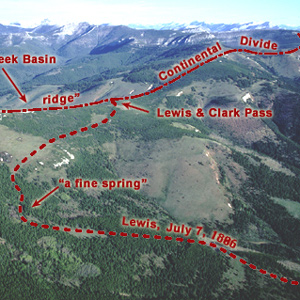
Sergeant Gass recorded that on 7 July 1806, Lewis’s detachment took a three-hour lunch break and then proceeded four miles, “when we came to the dividing ridge between the waters of the Missouri and Columbia.”
Larocque at Fort Mandan
by Joseph A. Mussulman
In the fall of 1804, Larocque’s job was to take a supply of North West Company merchandise to the Mandan and Hidatsa villages and trade for furs. While there, he asked the captains if he could join the expedition.
A Natural History Let Down
Post-expedition reactions
by Joseph A. Mussulman
For nearly 100 years, the Lewis and Clark Expedition’s full contribution to natural science was underpublished and a disappointment to many scientists expecting to learn more about the natural history of the regions explored. When it came to the mosquito, these naturalists were doubly disappointed.
Hungery Creek
And a return to Bald Mountain
by Joseph A. Mussulman
By the evening of 17 September 1805, their seventh sleep west of Travelers’ Rest, it was obvious to the captains that the Indians’ assurance that they could cross the mountains in six days was false, whereas the prediction that they would find no game there was all too true.
Fort Yates
Hunting party
by Joseph A. Mussulman
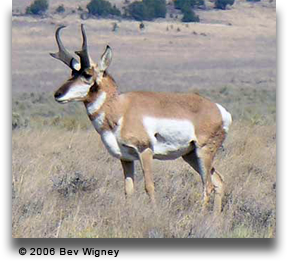
The Corps observed an Indian strategy for hunting game. As men on horseback herded pronghorns—”goats or Antelope,” Clark called them—into the river, boys swam among them and killed some with sticks, while others on shore shot them with bows and arrows.
Grays Bay
Shallow bay
by Joseph A. Mussulman
On the morning of 8 November 1805, the Corps’ flotilla entered a “nitch” they called Shallow Bay and paused for their midday meal near the remains of an Indian village with “great numbers of flees which [we] treated with the greatest caution and distance.”
The Clearwater Canoe Camp
by Joseph A. Mussulman
Still sick and exhausted from their recent crossing of the Bitterroot Mountains, Lewis, Clark, and their crew arrived on 26 September 1805, at what they called Canoe Camp, on the Clearwater River.
Mosquito Netting
Pomp's 'bier' was a 'bar'
by Joseph A. Mussulman
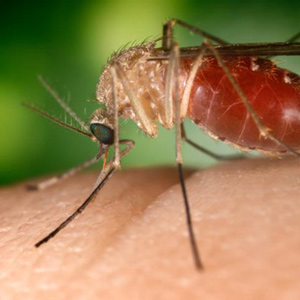
Lewis writes: “the bier in which the woman carrys her child and all it’s cloaths wer swept away as they lay at her feet she having time only to grasp her child.” This bier, then, is a bar or net serving to keep mosquitos from one’s personal blood supply.
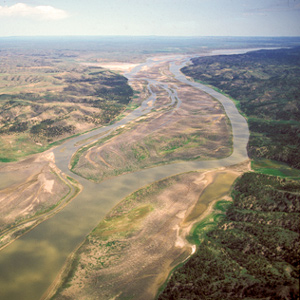
The Milk River by Air
Milky blend
by Joseph A. Mussulman
“from the colour of it’s water we called it Milk river.” He wondered whether this might be the river the Hidatsas had called “the river which scoalds at all others.”
The Expedition’s Flags
by Joseph A. Mussulman
The expedition’s supplies included an unknown number of American flags. Those that the journals refer to only as being “of second size,” and “of third size,” were given to selected Indian leaders as tokens of peace.
Seaman’s Creek
Clues to his name
by Joseph A. Mussulman
Twenty-eight and one-half miles upriver from their camp of 4 July 1806 the Indian road crossed a stream Lewis named after William Werner. At mile 31, they camped near the mouth of a stream the captain named after his dog, Seaman.
Thomas Howard
Private
by Barbara Fifer, Joseph A. Mussulman
On 23 January 1806, Lewis dispatched Howard and Werner to the Salt Camp on the ocean beach, to bring back a supply of salt. When they had not returned by the 26th, Lewis feared they had gotten lost.
Big Bend of the Missouri by Air
Around the bend
by Joseph A. Mussulman
They paced off the distance across “the gouge,” wrote Clark, and found it to be about a mile and a quarter; he estimated the distance around the oxbow to be thirty miles.
William Clark (1784–1838)
by Joseph A. Mussulman
Clark was a highly intelligent man, and in terms of the practical knowledge required to make his way in the wilderness, to lead men, and to succeed in the world of frontier politics, he was highly educated and consummately effective.
The Woodlands
Repository of plant specimens
by Catharine P. Fussell, Joseph A. Mussulman, Timothy Preston Long
Lewis sent plant specimens to William Hamilton who cultivated them in his garden at The Woodlands outside of Philadelphia.
Columbia River Explorers
Hecata, Gray, and Vancouver
by Joseph A. Mussulman
The Corps of Discovery was but one of a great number of expeditions by land and sea made between 1770 and 1870 across the North American continent in search of a Northwest Passage. Lewis knew much about the mouth of the Columbia River.
Station Camp
"the extent of our journey"
by Joseph A. Mussulman
“…this I could plainly See would be the extent of our journey by water, as the waves were too high at any Stage for our Canoes to proceed any further down ….”
Foggy Ohio Mornings
Weather report
by Joseph A. Mussulman
They camped for that night somewhere on the big island now known as Brown’s. When darkness fell the two canoes, which carried most of Lewis’s most valuable supplies, were still behind. “Ordered the trumpet to be sound[ed],” he wrote, “and they came up in a few minutes.”
The Wabash River
Familiar water
by Joseph A. Mussulman
Lewis, Clark, and their crew must have passed the mouth of the Wabash about 5 November 1803. The captains had crisscrossed the area in the course of their military duties, and in 1792 Clark had gained one of his first experiences in river navigation.
Chinookan Houses
Inside Chinookan plank houses
by Joseph A. Mussulman
Sgt. Gass reported, “We found our huts smoked; there being no chimneys in them except in the officers’ rooms.” Coastal Natives had devised simple, reliable ways of manipulating the balance of atmospheric pressure, temperature and air flow in what is now called the “stack effect.”
Lewis & Clark by Air
by Jim Wark, Joseph A. Mussulman
Aerial photographer Jim Wark and scholar Joseph A. Mussulman offer a fascinating new perspective on the Corps of Discovery’s historic journey. From Monticello in the east to Fort Clatsop on the Pacific Ocean, the entire 2004 book is provided online with updates by Mussulman.
Dung Beetles
by Joseph A. Mussulman
In his 261-word catalog of the insects, Lewis wrote that “a great variety of beatles common to the Atlantic states are found here likewise,” except that “the black beatle usually [c]alled the tumble bug which are not found here.”
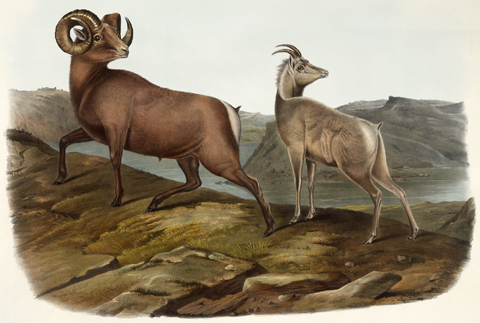
Observing Bighorn Sheep
A pictorial essay
by Joseph A. Mussulman
By telling the story of how these photos and videos were created, the behaviors of the bighorn sheep are described.
The Salmon River by Air
"Gloomey Picture"
by Joseph A. Mussulman
In the four days between 21 and 24 August 1805, Clark explored fifty-two miles down the Salmon River (he named it Lewis’s River) from today’s North Fork, Idaho. All he saw was a continuous series of rapids.
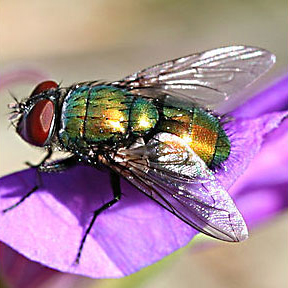
Crane Fly
Tipula abdominalis
by Joseph A. Mussulman
On 27 December 1805, Clark wrote: “Musquetors to day, or an insect So much the Size Shape and appearance of a Musquetor that we Could observe no kind of difference.”
The Dearborn River Crossing
Along the Old North Trail
by Joseph A. Mussulman
Shortly after crossing the Dearborn River, Lewis saw that the Indian road “continued along the foot of the mountain to the West of north” so he and his men cut northeast across the “tolerably level” plain toward the Sun River.
Defining ‘Discover’
Shades of meaning
by Joseph A. MussulmanThe Dictionary of Bias-Free Usage remonstrated that “only by a strange twist of white ethnocentrism can one be considered to ‘discover’ a continent inhabited by millions of people.” Political correctitude might suggest that we simply drop the word discovery from our Lewis and Clark lexicon, and just speak of the captains as explorers.
John Evans
Mapping the way
by Joseph A. Mussulman, Kristopher K. Townsend
John Evans provided maps of the Missouri River and Rocky Mountains, the most significant outcome of the Mackay-Evans Expedition.
The Barge
Barge, keelboat, or just 'the boat'?
by Joseph A. Mussulman
Meriwether Lewis listed a “Keeled Boat” in his pre-expedition shopping list, but after he finally got it, he and the other journalists of the Corps of Discovery simply called it “the boat” (190 times) or, less often, “the barge” (32 times).
The Salmon River
A river of no return
by Joseph A. Mussulman
On the 23 August 1805, the centuries-old fantasy of a “water route across the continent for the purposes of commerce” dissolved in the roar of an unimaginable torrent–one of the most dangerous, unforgiving rivers in North America, that would later be called “The River of No Return.”
Lewis’s Branding Iron
by Joseph A. Mussulman
Lewis may have had this branding iron custom-made before he left the East, perhaps at Harpers Ferry, although there is no mention of it in existing records. Such tools commonly were used for marking wooden packing crates and barrels, and on leather bags, until the early 20th century.
Lewis’s Air Gun
Lewis's great medicine
by Joseph A. Mussulman
Thomas Rodney stated: “It is a curious piece of workmanship not easily described and therefore I omit attempting it.” Of the Indians, Lewis wrote that it “astonishes them very much, they cannot comprehend it’s shooting so often and without powder.”
Jefferson’s Monticello
Source and paradigm
by Joseph A. Mussulman
After some eight months of planning and discussion, President Thomas Jefferson handed his twenty-eight-year-old secretary, Captain Meriwether Lewis, a letter containing instructions for the conduct of one of the most significant undertakings in American history.
Jews Harps
by Joseph A. Mussulman
Although nobody can determine how this tiny musical instrument was named, we do know Lewis included them in his list of Indian gifts. Whitehouse records the merriment of the Yankton Sioux playing them and dancing.
The Kansas River
by Joseph A. Mussulman
Clark was informed by one of the engagés who had traded along the Kansas that the river took its name from the Indians known as the Kanzes, or Kaw, nation which at that time dwelt on its banks.
Walnut Street Prison and A.M.E. Church
Ironic juxtaposition
by Charles F. Reed, Joseph A. Mussulman
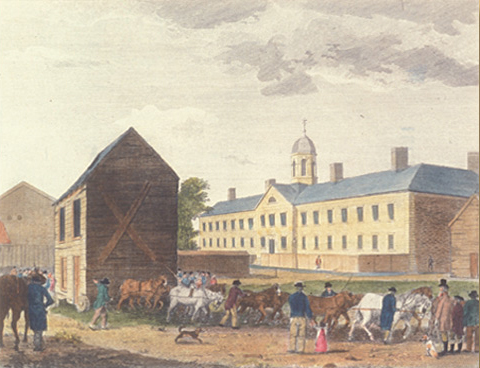
The irony inherent in the juxtaposition of the A.M.E. Church’s prime sanctuary as a symbol of fellowship and hope, with the Walnut Street Gaol (jail) as a place of isolation and despair, would not have been lost on any black person or white abolitionist.
Jerusalem Artichokes
Helianthus tuberosus
by Joseph A. Mussulman, Kristopher K. Townsend
The French explorer Samuel de Champlain found the vegetable growing in Indian gardens along the Saint Lawrence seaway and carried specimens of it back to France in 1603, where its root soon became a staple food for humans.
La Véndrye’s Golden Sands
His visit to Spirit Mound
by Joseph A. Mussulman, Kristopher K. Townsend
La Vérendrye’s 1728 name for Spirit Mound contains several puzzling statements. Pako’s reference to that “very fine gold-coloured sand,” suggests the “little mountain” was located in a fabulous land, an Eldorado, of precious natural riches.
The Portage Route
Around the Falls of the Missouri
by Joseph A. Mussulman
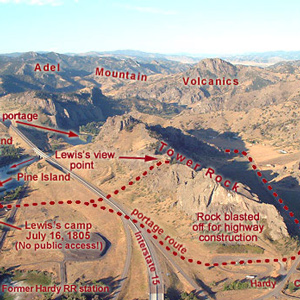
The shuttling of all the baggage and six canoes across the prairie to the upper portage camp opposite White Bear Islands began on 21 June 1805 and was completed on 2 July 1805. All in all, it was one of the most grueling undertakings on the entire expedition.
Lewis’s Birthday Meditation
A "sadly interesting passage"
by Joseph A. Mussulman
It has been remembered as “the most gloomy self-examination of the entire journal,” and “a passage of unreasonable melancholy,” of poignant sadness and self-doubt.
Travelers’ Rest Creek
Today's Lolo Creek in Montana
by Joseph A. Mussulman
At 3 o’clock in the afternoon, 11 September 1805, Toby led the Corps of Discovery out of Travelers’ Rest camp toward the Bitterroot Mountain barrier.
Jefferson-Lewis Cryptology
Jefferson's ciphers
by Joseph A. Mussulman
It was Thomas Jefferson who gave cryptography in America its greatest impetus. Sometime in 1803 Jefferson presented Meriwether Lewis with a cipher based on a square table or tableau used to create a substitution cipher.
Yellowstone Mouth by Air
"Long wished for spot"
by Joseph A. Mussulman
“I ascended the hills,” Lewis wrote, “from whence I had a most pleasing view of the country, particularly of the wide and fertile vallies formed by the Missouri and Yellowstone Rivers.”
Mapping the Road to the Buffalo
Clark's interpretation of Lewis's shortcut
by Joseph A. Mussulman
Clark produced this map of Lewis’s route sometime after the Corps was reunited on 12 August 1806, near today’s New Town, North Dakota.
Fort Randall Dam
Wolf tricks
by Joseph A. Mussulman
Here, Sergeant Gass went out with one of the hunters to retrieve the meat and hide of a buffalo the man killed the previous evening. The hunter had left his hat on the carcass “to keep off the vermin and beasts of prey,” apparently believing the scent of a human would scare them away”
Yellowjackets
Vespula pensylvanica
by Joseph A. Mussulman
Ordway reported that “our horses got Stung by the wasps” on 20 September 1805 while the party was making its way down the west side of the Bitterroot Mountains toward the Clearwater River. Whitehouse called them “the yallow wasps.”
The Manual of Arms
Basic maneuvers for every soldier
by Joseph A. Mussulman
The first major objective of basic training was mastery of the “Manual Exercise,” or manual of arms. It involved 27 commands from the sergeant, calling for 56 motions by the recruit. The single command, “Prime and Load,” involved fifteen motions.
Nez Perce War of 1877
Forty miles from freedom
by Joseph A. Mussulman
Two troops of the 1st U.S. Cavalry met their first defeat. That set in motion the heroic flight of 450 women, children and elders, 200 warriors, and their only remaining wealth—some 2,000 horses—toward the safe refuge that would forever elude them.
Portable Inkwell
Their most important tool
by Joseph A. Mussulman
None of their tons of supplies, not even the guns, powder, and bullets with which they fed themselves, were ultimately as important as the pens, ink, and paper they carried, and protected from the elements.
La Freeman-Custis Expedición
La Gran Excursión
by Dan Flores, Joseph A. Mussulman
Narrado tanto en inglés como en español, Daniel Flores narra la historia de una exploración paralela y sureña ahora casi olvidada.
Coyotes
Canis latrans
by Joseph A. Mussulman
Clark shot “a Prarie Wollf, about the Size of a gray fox bushey tail head & ear like a wolf.” Lewis wrote his description of what proved to be a new species on 5 May 1805, in northeastern Montana.
Wild Ginger
Asarum canadense
by James L. Reveal, Joseph A. Mussulman
Lewis reported that a specimen of this plant “was taken the 1st of June at the mouth of the Osage River; it is known in this country by the name of the wild ginger.”
Flag Presentations
by Joseph A. Mussulman
Lewis and Clark usually distributed flags at councils with the chiefs and headmen of the tribes they encountered—one flag for each tribe or independent band.
Cottonwoods
Populus sp.
by Joseph A. Mussulman, Kristopher K. Townsend, Mark Behan
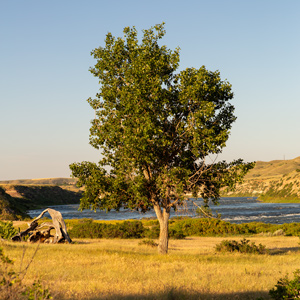
During the Expedition, they encountered four species of cottonwood trees as they moved across North America. One wonders how they would have managed without them.
The Osages
by Joseph A. Mussulman, Kristopher K. Townsend
The Osage were experienced traders, exchanging horses and Indian slaves for French guns, knives, axes, kettles, and other metal objects. After the 1760s, the Osage adopted a new economic system of planting gardens in permanent villages, summer hunts in the plains, and fur-trapping in the winter.
Unaccountable ‘Artillery’ of the Rockies
by Joseph A. Mussulman
Near the Great Falls, Lewis describes loud noises “resembling precisely the discharge of a piece of ordinance of 6 pounds at the distance of three miles.” Thunder didn’t seem likely as “It was perfectly calm, clear, and not a cloud to be seen.”
Wheeler’s Lolo Crossing
On the Northern Nez Perce Trail
by Barbara Fifer, Joseph A. Mussulman
One of Wheeler’s most successful efforts to amplify any part of Lewis and Clark’s route was his exploration of the Lolo Trail. For that he relied heavily on Elliott Coues’ 1893 annotations to the expedition’s narrative.
York in the Journals
A comprehensive listing
by Joseph A. MussulmanWild Horses
by Joseph A. Mussulman
On 14 August 1805, Meriwether Lewis commented on the Shoshones’ herds: “Most of them are fine horses…. I saw several with Spanish brands on them, and some mules which they informed me that they had also obtained from the Spaniards.”
Sheheke’s Delegation
by Joseph A. Mussulman
Sheheke’s diplomatic trip to Washington City and his difficult return home brought down the careers of at least two great leaders—himself, and Meriwether Lewis.
Ocean in View?
Premature elation
by Joseph A. Mussulman
They fancied they could already see and hear the Pacific Ocean, although it was still more than 20 miles away, well beyond their horizon. Clark’s famous exclamation was another instance of the captains’ habit of reacting prematurely.
Elk Point
Names
by Joseph A. Mussulman
In the vicinity of Elk Point, South Dakota, the captains found a variety of unfamiliar minerals, including what Clark believed were arsenic and cobalt. “Capt. Lewis in proveing the quality of those minerals was near poisoning himself by the fumes & taste.”
Camp Disappointment by Air
by Joseph A. Mussulman
On 19 July 1806 Lewis intersected the Marias River six miles above the point where he had ended his exploration of its lower reaches the previous spring. He and his party now continued northwest along the Marias reaching its most northern point.
Blue Grouse
Dendragapus obscurus
by Joseph A. Mussulman
“this bird is fully a third larger than the common phesant of the Atlantic states. it’s form is much the same. it is booted nearly to the toes and the male has not the tufts of long black feathers on the sides of the neck which are so conspicuous in those of the Atlantic.”
Crooked Falls by Air
A "thousand conjectures"
by Joseph A. Mussulman
After passing “one continued rappid and three small cascades of abut for or five feet each,” Lewis “arrived at a fall of about 19 feet,” which he suitably named “the crooked falls” and proceeded to describe its geometry.
Lewis’s Hunting Accident
Lewis's closest call
by Joseph A. Mussulman
The most serious hunting mishap, and surely the most memorable episode in Lewis’s frequently referenced “chapter of accedents,” was the moment on 11 August 1806 when Pierre Cruzatte shot him in the buttocks.
Promises to Keep
Lewis's threats and promises
by Joseph A. Mussulman
Pretending to have been insulted by their accusation, Lewis pompously declared that “if they continued to think thus meanly of us…they might rely on it that no whitmen would ever come to trade with them or bring them arms and amunition.”
Bearberry
Kinnikinnick, Arctostaphylos uva-ursi
by James L. Reveal, Joseph A. Mussulman
Lewis and Clark sometimes called it kinnikinnick, sometimes sacacommis. At Fort Clatsop on 29 January 1806, he described this useful plant.
The Trapper Peaks
Bitterroot Mountain sentinels
by Joseph A. Mussulman
On 7 September 1805, the day after they left the Salish people at Ross’s Hole, the Corps proceeded north down the Bitterroot River valley. “The foot of the Snow toped mountains approach near the river on the left,” wrote Clark.
Rattlesnakes
Crotalus sp.
by Joseph A. Mussulman
Lewis awoke to find “a large rattlesnake coiled on the leaning trunk of a tree under the shade of which I had been lying.” It certainly wasn’t the first rattlesnake seen on the trip, but he killed this one, and took time to study it.
Arrival at the Pacific
Exploring Long Beach
by Joseph A. Mussulman
Clark was pleased that his men appeared “much Satisfied with their trip beholding with estonishment the high waves dashing against the rocks & this emence ocean.”
The Tambourine
by Joseph A. Mussulman
Instruments resembling tambourines are mentioned several times in the journals, but always in descriptions of Indian music, except for Sergeant Ordway’s comment on New Year’s Day of 1805.
Bighorn: Sheep or Goat?
by Joseph A. Mussulman
We confront the paradox that Elliott Coues pointed out in 1893—that Lewis and Clark had mistaken goats with wool … for sheep, and sheep without wool . . . for ibexes. Succeeding naturalists heightened the misunderstanding with invidious comparisons.
The Jefferson Canyon
The fourth mountain gate
by Joseph A. Mussulman, Robert N. Bergantino
On 1 August 1805, Clark and the expedition’s flotilla of eight dugout canoes pushed up the Jefferson River through “a verrey high mountain which jutted its tremendious Clifts on either Side for 9 Miles, the rocks ragide.” They emerged into a “wide exte[n]sive vallie.”
Mosquito Etymology
Names and classifications
by Joseph A. Mussulman
Potts, might have called it a grosser Mücke (large gnat) or a Stechmücke (biting gnat). Labiche and Drouillard might have called it a cousin or a moucheron. But ever since early Colonial days it has chiefly been known in America by its Spanish name, mosquito.
Meeting the Snake
Water color
by Joseph A. Mussulman
The Corps’ four-day trip to this point from Canoe Camp on the Clearwater in their five crowded dugouts was a taste of things to come.
Bad ‘humered’ Island
Change of heart
by Joseph A. Mussulman
On the evening of 25 September 1804 after a negative encounter with the Lakota Sioux, the Corps camped on a nearby island Clark called “bad humered Island.” The next morning, the Indians had a change of heart.
Apsáalooke Country
by Joseph A. Mussulman
The Crow People called themselves Apsáalooke, sometimes heard as Absarokas or Absalookas, or “Children of the Large-beaked Bird.” Various early white travelers transcribed or defined the name differently, but the Apsáalooke maintain it refers to the raven. One of the oldest and most famous landmarks on Lewis and Clark’s route, now known officially, but erroneously, as Pompeys Pillar or, among the Apsáalooke, Iish-biia ah-naac’he’.
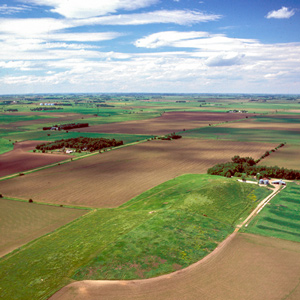
Always the Wind
by Joseph A. Mussulman
On 4 June 1805, while they were exploring the Maria’s River, Lewis and his men camped “among the willow bushes which defended us from the wind which blew hard from the N. W.” Homesteaders on the plains planted Shelterbelts to shield from strong wind and blowing snow.
Naming Places
Lewis and Clark's Montanan names
by Joseph A. Mussulman
Lewis and Clark’s name “Travelers Rest” was too site-specific to simultaneously function equitably with the creek, the peak, the hot springs, the pass, and all the rest. By the time settlers began moving into the region, the old name was basically meaningless.
Mule Deer
Odocoileus hemionus
by Joseph A. Mussulman
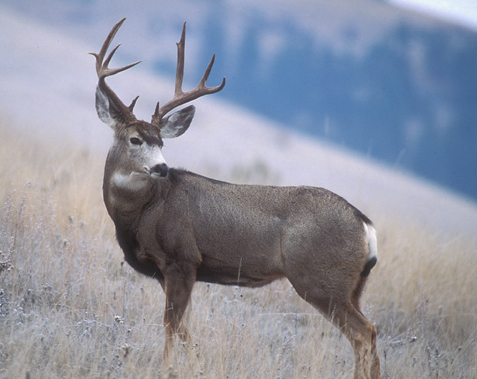
Drouillard spotted the first “Deer with black tales” on 5 September 1804, on the cliffs upstream from the mouth of the Niobrara River in northeast Nebraska. By 10 May 1805 Lewis had seen enough specimens to write an 800-word description of the new species.
The Falls of the Missouri
by Joseph A. Mussulman
From Indian information the previous winter, the captains knew they would encounter a great falls in the Missouri River. What they found was a 14-mile-long series of waterfalls and rapids that drops 473 feet.
Snowbank Camp to Lonesome Cove
Tough going
by Joseph A. Mussulman
Although none of the journalists mentioned it, the very presence of last winter’s snow on those mountains in late September must have aroused the feeling that crossing the Rockies was going to be even tougher than they had figured.
Fiddle Music
Fiddle music on the trail
by Joseph A. Mussulman
The principal catalyst for their musical diversions was undoubtedly Private Pierre Cruzatte, whose official duty was as a boatman, but who also played the fiddle.
The Platte River
High road junction
by Joseph A. Mussulman
The Corps of Discovery arrived at the mouth of the Platte on 21 July 1804, noting first of all that “the Current of This river Comes with great Velocity roleing its Sands into the Missouri, filling up its Bend….”
The Bears Tooth
Key landmark on the Old North Trail
by Joseph A. Mussulman
The Bears Tooth was an important landmark on the the ancient Indian road that has come to be known as the Old North Trail. It was included on Nicholas King’s 1804 map, and the captains expected to find it.
The Niobrara River
Rushing river
by Joseph A. Mussulman
“We hoisted Sail,” wrote Ordway, and “ran verry fast a Short time. Broke our mast.” The party “came to” on the west side of the Niobrara. There the men made a new mast from the trunk of a tall, sturdy red cedar, which apparently lasted at least until they reached the Mandan villages.
Outfitting the Expedition
Buying supplies in Philadelphia and St. Louis
by Frank Muhly, Joseph A. Mussulman
The original shopping list contained more than 180 items, including various “Mathematical Instruments”, arms and accouterments, ammunition, clothing, camp equipage, provisions, Indian presents, medicine, and packing materials.
Scales and Steelyards
Tools of commerce
by Joseph A. Mussulman
The use of a lever as a tool for measuring weight in terms of current standards of weights and measures may be at least as old as labor and commerce. It embodies a classic proposition in elementary mechanics.
Charles B. J. F. de Saint Mémin
Early American portraitist
by Joseph A. Mussulman
Charles Balthazar Julien Févret de Saint-Mémin (1770–1852) was a portrait artist whose works include Lewis, Clark, Chief Sheheke and his wife Yellow Corn.
The River’s End
End of navigable water
by Joseph A. Mussulman
Lewis: “here I halted and examined those streams and readily discovered from their size that it would be vain to attempt the navigation of either any further.”
Father De Smet’s Arrival
Did they know any Lolos?
by Joseph A. Mussulman
Among the most faithful of the missionaries’ converts to Catholicism was a half-breed trapper named Lolo who was killed by a grizzly bear in November 1850.
The “Deserts of America”
by Joseph A. Mussulman
The men of the Corps of Discovery were fascinated by the varied textures, shapes and colors of the 200- to 300-foot cliffs that defined the river’s immediate borderlands. Clark judged from all he could see that “this Countrey may with propriety … be termed the Deserts of America.”
Columbia River Dams
The rough places plain
by Joseph A. Mussulman
Bonneville Dam, was the first dam to be built on the Columbia River. The slackwater pool it impounds, called Lake Bonneville, eliminated the Cascades as a barrier to commercial shipping, and provided a deep, navigable channel for barges and tugs.
The Little Sioux River
A froth of feathers
by Joseph A. Mussulman
A highlight of 8 August 1804 was a profusion of feathers floating like a froth on the water. The feathers went on for three miles “in such quantities as to cover pretty generally sixty or seventy yards of the breadth of the river.”
Yellowstone Canoe Camp
by Joseph A. Mussulman
One week and a hundred miles after starting down the Yellowstone River, Clark finally found cottonwood trees large enough for building canoes. That night some Indians made off with half their horses.
The Beaverhead Canyon Gateway
Last gate of the Rockies
by Joseph A. Mussulman, Robert N. Bergantino
Lewis’s simple, orderly concept of the Rocky Mountains began to crumble. The truth was, this was not the easy portage to the Pacific Ocean they had expected from the beginning. Countless “chains” of mountains still intervened.
Grizzly Bear Encounters
Thirteen significant encounters
by Joseph A. Mussulman
“the Indians give a very formidable account of the strength and ferocity of this anamal, which they never dare to attack but in parties of six, eight or ten persons; and are even then frequently defeated with the loss of one or more of their party.”
The Hunters’ Final Tally
by Joseph A. Mussulman
Historian Arlen Large tallied the journalists’ references to hunters by name, and came up with a list of nine who were mentioned in connection with “hunting episodes” a total of twenty-five times or more–a purely arbitrary cutoff number. George Drouillard led the list.
Barbary Coast War
Lewis's "Mahometant yoke"
by Joseph A. Mussulman
The story of what was known by his detractors as “Jefferson’s War,” opens for us a narrow window on a little known but intriguing episode in Meriwether Lewis’s brief position as the President’s secretary.
Flea Country
A multitude of fleas
by Joseph A. Mussulman
During the portage around the Falls of the Columbia River, as Biddle paraphrased it, “we found that the Indians had camped there not long since, and had left behind them multitudes of fleas.”
Major Owen’s Lolos
An early settler's records
by Joseph A. Mussulman
Bitterroot Valley businessman John Owen counted no Lolos among the customers he dealt with at Fort Owen, but he occasionally hired one as a trail-hand.
F. Jay Haynes
by Joseph A. Mussulman
Many of the first photos in present Montana were by F. Jay Haynes. His story reflects the emergence of photography itself.
Fort Clatsop Today
Reconstructing the fort
by Joseph A. Mussulman
Today’s Fort Clatsop stands at or near the site of the Corps’ winter encampment of 1805-06 was built on the same floor plan that Clark drew on the cover of the Elkskin-covered Journal. The rest of the present structure resembles the original only in a remote sense.
Fortunate Camp
Western road
by Joseph A. Mussulman
Today the confluence of the Beaverhead River and Horse Prairie Creek is submerged at left of the large island (photo center) in Clark Canyon reservoir, beneath eighty feet of water when the reservoir is full.
Lewis’s Three Wishes
Pencil, pen, and camera obscura
by Joseph A. Mussulman
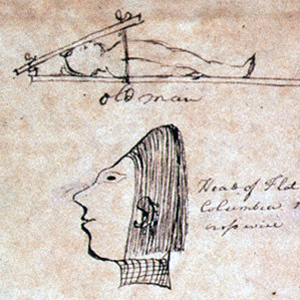
“I wished for the pencil of Salvator Rosa, or the pen of Thompson, that I might be enabled to give to the enlightened world some just idea of this truly magnifficent and sublimely grand object, which has from the commencement of time been concealed from the view of civilized man”
Friedrich Wilhelm von Steuben (1730–1794)
Early American Army trainer
by Joseph A. Mussulman
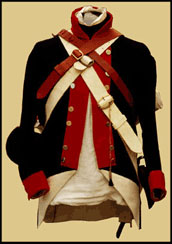
Until he presented his services to General Washington at Valley Forge, the Continental Army still consisted merely of a number of state-sponsored militias that were entirely independent of one another, each operating according to its own rules and regulations.
Gold Mines on the Trail
by Joseph A. Mussulman
In 1862, a prospector named John White and his partners arrived at a creek previously named for Alexander Willard of the Corps of Discovery. White hit pay dirt on one of the sandbars in the creek. Plenty of other gold-hungry pilgrims were near enough to respond within weeks.
Too Né’s Delegation
by Joseph A. Mussulman
A delegation of chiefs from the Arikara, Ponca, Omaha, Otoe, Iowa, and Missouria nations sailed down the Missouri with Corporal Warfington on the expedition’s keelboat in the spring of 1805. Early in January, 1806, President Jefferson greeted them in Washington City with a formal speech.
Carl Linnaeus
God created, Linnaeus arranged
by Joseph A. Mussulman
Even in Lewis and Clark’s day, new species were being classified using a system developed by naturalist Carl Linnaeus.
Return to the Portage
Lewis's hiatus
by Joseph A. Mussulman
One can almost feel the thrill of wakening to a clear early-summer dawn at this powerful place on the pregnant plains where the Medicine meets the Missouri. Here began a five-day hiatus in Lewis’s master plan for his junket to find the boundary of British-held Canada.
Paxson’s Travelers’ Rest
The artist's interpretation
by Joseph A. Mussulman
At Lewis’s right is Clark’s servant, York, dressed in blue as befitted a personal slave at that time. The Indian squatting at Lewis’s left hand is Toby, the Shoshone guide the captains had hired to lead them across the Bitterroot Mountains toward the Columbia River.
Gates of the Mountains
The second gate
by Joseph A. Mussulman, Robert N. Bergantino
Late in the day on 19 July 1805, Lewis and his party entered a canyon between “the most remarkable clifts that we have yet seen.” They seemed to rise “from the waters edge on either side perpendicularly to the hight of 1200 feet.”
John James Audubon
(1785–1851)
by Doug Erickson, Joseph A. Mussulman
America’s greatest ornithologist, John James Audubon, was just starting his career when Lewis and Clark returned, and there is ample evidence that he drew inspiration from Lewis and Clark’s writings.
Portraits of William Clark
by Joseph A. Mussulman
Four portraits and one statue by five different artists show a diverse interpretation of the likeness of William Clark.
Naming the Marias
"in honour of Miss Maria"
by Joseph A. Mussulman
“The whole of my party to a man except myself were fully perswaided that this river was the Missouri, but being fully of opinion that it was neither . . . I determined to give it a name and in honour of Miss Maria W____d.”
Fort Mandan by Air
"most perfect harmony"
by Joseph A. Mussulman
Lewis attested that his men were “in excellent health and sperits, zealously attached to the enterprise, and anxious to proceed; not a whisper of murmur or discontent to be heard among them, but all act in unison, and with the most perfect harmony.”
Harvesting the Hunt
by Joseph A. Mussulman
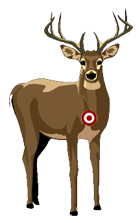
After the animal is shot, the work begins: field dressing, hauling the meat to camp, butchering, and preserving the extra meat for future meals.
Clark’s Portage Route Survey
Measuring the falls and portage
by Joseph A. Mussulman
On 17 June 1805, Clark and five men set out to determine the best portage route around the Great Falls of the Missouri. On the way up the river, he stopped to also measure the fall of the river and to map the falls.
Over Tillamook Head
Clark's point of view
by Joseph A. Mussulman
After passing the salt works and continuing along the “round Slippery Stones under a high hill,” Clark related, “my guide made a Sudin halt, pointed to the top of the mountain and uttered the word Pe Shack which means bad, and made Signs that we . . . must pass over that mountain.
John Collins
Private
by Barbara Fifer, Joseph A. Mussulman
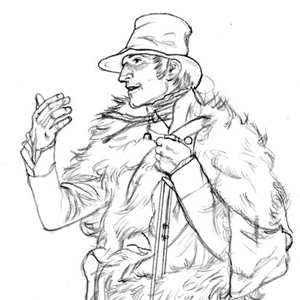
He had gotten off to a bad start, but apparently, the captains, or at least Clark, saw something in him that was worth saving. They would name Idaho’s Lolo Creek, Collins Creek.
Order of Encampment
Lay out of the nightly camps
by Joseph A. Mussulman
Spacing between tents, as well as lines of tents, was strictly measured. Privates’ tents, accommodating 6 men each, were between the sergeants’ tents; all were two feet apart. The “sink,” or latrine, was to be 60 paces (300 feet) in front of the first line of tents.
The Bitterroots by Air
"Tremendious Mountanes"
by Joseph A. Mussulman
“I have been wet and as cold in every part as I ever was in my life,” Clark complained. “Indeed I was at one time fearfull my feet would freeze in the thin mockersons which I wore.”
An Offer to Raise Jean Baptiste
Clark's promises
by Joseph A. Mussulman
Clark’s affection for Sacagawea’s little boy, Jean Baptiste, becomes evident while canoeing down the Yellowstone River. This article analyzes Clark’s offer to his father, Toussaint Charbonneau, to raise the child.
Nathaniel Pryor
Sergeant
by Joseph A. Mussulman
Pryor was assigned several special missions from exploring the Sandy River to escorting Mandan Chiefs to Washington City. He would barely survive his adventures on the Yellowstone River.
System, Model and Legacy
Nature's taxonomy
by Joseph A. Mussulman
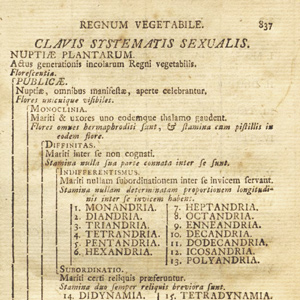
The science of the orderly classification of all living and extinct organisms is called taxonomy. It comprised a hierarchical outline of descriptors extending between the most general and the most specific and Lewis and Clark had a role.
Making Leather
by Joseph A. Mussulman
“The men of the garison are still busily employed in dessing Elk’s skins for cloathing.” Regrettably, Lewis was compelled to add that “they find great difficulty for the want of branes [brains].”
Wheeler’s Railroad Promotions
The Lewis and Clark Centennial
by Barbara Fifer, Joseph A. Mussulman
The Northern Pacific Railway had identified two new attractions within its Wonderland—a centennial commemoration of the historic Lewis and Clark expedition, plus extensive segments of the original trail within sight of its rails.
The Lochsa River
Packer Meadows to Colt Killed Creek
by Joseph A. Mussulman
Snow was falling in the high country above them on the morning of 14 September 1805 when, after striking camp two miles downstream from Packer Meadows, the Corps slogged down the Glade Creek canyon through rain and sleet.
The Lower Yellowstone
A promising location
by Joseph A. Mussulman
On 30 July 1806 Clark and his party camped near the mouth of the War har sah, or Powder River. He summarized the Yellowstone’s attractions, directing most of his attention toward opportunities for immediate expansion of the fur trade.
Ecola
Whale tale
by Joseph A. Mussulman
By the time Clark and his party got to present-day Cannon Beach, Oregon, on 8 January 1806, the locals had picked the dead whale’s 105-foot-long carcass clean.
Early American Hunting
by Joseph A. Mussulman
Governor William Bradford of the Massachusetts Bay Colony hired the local Indians to hunt for the colony. Early Americans later learned several hunting methods from Indians such as relaying, driving, and still hunting.
End of the Enlightenment
Anti calomel and the "genteel tradition"
by Joseph A. Mussulman
No more calomel! Not just an anthem, a reflection on the transition from the “Age of Enlightenment” to the “genteel tradition.”
Packer Meadows
"A pretty little plain"
by Joseph A. Mussulman
Lewis acknowledged it was “a pretty little plain of about 50 acres plentifully stocked with quawmash” and “one of the principal stages or encampments of the indians”
Pittsburgh by Air
Golden triangle
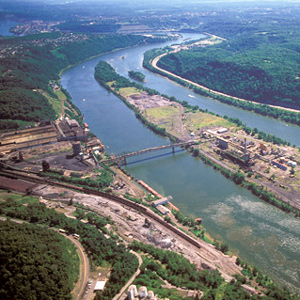
by Joseph A. Mussulman
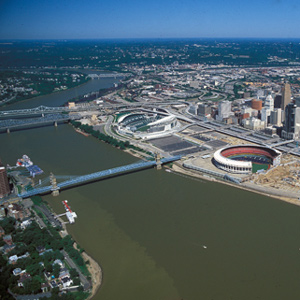
The Monongahela River joins the Allegheny River at the apex of Pittsburgh’s “golden triangle” to form the river called Ohio—an Iroquois word meaning “big and beautiful.” After the Revolutionary War, Pittsburgh quickly grew into a gathering-place and jumping-off point.
Louisiana’s Political Geography
by Joseph A. Mussulman, Pierce Mullen
On 9 April 1682, René La Salle, claimed “possession of this country of Louisiana.” Thus, without any belligerent confrontations began the decline of one already ancient meta-culture, and the rise of a succession of new empires.
The Grand Tower
Demons
by Joseph A. Mussulman
In 1673 French explorers Père Marquette and Louis Joliet listened to local Indians’ warnings about this place and erected a cross atop the ninety-foot-high rock to disempower the demons said to be lurking in the treacherous whirlpool at its base.
Experience the Lewis and Clark Trail
The Lewis and Clark Trail Experience—our sister site at lewisandclark.travel—connects the world to people and places on the Lewis and Clark Trail.
Discover More
- The Lewis and Clark Expedition: Day by Day by Gary E. Moulton (University of Nebraska Press, 2018). The story in prose, 14 May 1804–23 September 1806.
- The Lewis and Clark Journals: An American Epic of Discovery (abridged) by Gary E. Moulton (University of Nebraska Press, 2003). Selected journal excerpts, 14 May 1804–23 September 1806.
- The Lewis and Clark Journals. by Gary E. Moulton (University of Nebraska Press, 1983–2001). The complete story in 13 volumes.